Soil and Site Evaluation in Rochester, MN
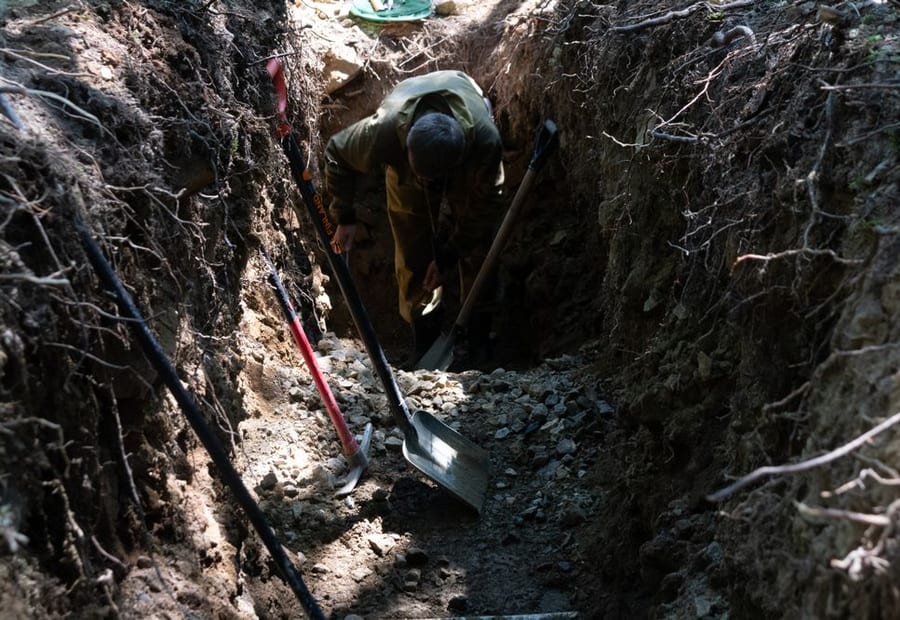
Every septic job in Olmsted County starts in a hole in the ground, because the soil is what decides everything that follows. Rochester Septic performs the soil and site evaluation that reads your lot, sizes the system, and tells you whether you are looking at a conventional buried field or a raised mound. We are an MPCA certified SSTS installer, and the evaluation is the first and most important step on any new system or replacement.
The old percolation test only timed water dropping in a hole. A soil and site evaluation reads the profile itself. We open a test pit, read each soil horizon, and look for the two things that drive the design here: the depth to the fractured dolomite or limestone bedrock, and the depth to any seasonally saturated soil, marked by the gray and rust mottling. Add the slope and the setbacks and you have the report that the design and the county permit are built on.
What the Report Actually Decides
The evaluation answers one question with money attached: how much clean, unsaturated soil sits above the limiting layer. Three feet or more and a buried or shallow field can work. Less than that and Minnesota rules will not let you bury a field, which pushes the design toward a mound built up out of clean sand. That is why the same house on two lots a mile apart can need systems that differ by many thousands of dollars. The house did not change. The rock under it did.
Reading Karst Ground
This county hands an evaluator a predictable problem: shallow rock. The soil runs thin over fractured dolomite and limestone, and the pit face often reaches bedrock long before three feet of clean soil is behind it. That is why so many evaluations here end with a mound recommendation. On the lower ground near the Zumbro River, a seasonal high water table adds a second limit, and the mottling in the pit tells us how high it climbs. Depth to rock can jump from one pit to the next on the same lot, so we read what your specific pit shows rather than assuming the county average.
Test Before You Commit
The evaluation is the cheapest, highest-value step on the whole project, whether you are building, replacing a failed system, or deciding whether to buy a lot at all. It turns a guess into a design and a design into a real number. Buying land? Test before you close. Building? Test before you site the house. Call (507) 555-0148 and we will get a pit open and your ground read.
Is this just the old perc test under a new name?
It took the perc test's place and reads far more. The old percolation test only clocked how fast water fell in a hole, which said a little about rate and nothing about cause. A modern soil and site evaluation reads the whole profile in an open pit: the texture and structure of each layer, the depth to bedrock, the depth to any seasonally saturated soil marked by mottling, and the slope of the ground. Around Rochester the depth to rock is often the number that governs the entire design, so the evaluation is the true starting point rather than a box to tick.
What happens when the evaluator comes to my property?
We cut one or more test pits with a backhoe where the system is likely to land, then read each pit wall by hand. We log the soil horizons, measure how far down the fractured dolomite or limestone sits, hunt for the gray and rust mottling that shows how high the water table rises in a wet season, and mark the slope and the setbacks. Those notes fill the state evaluation form, which anchors the design and the permit. It is muddy, deliberate work, and it is the most important hour on the whole project.
Why can you not price the job until the soil is read?
Because the ground writes the design and the design writes the number. Until we know how far down the rock and the saturated soil sit, we cannot say whether your lot carries a cheap buried field or a costly mound, and any figure quoted before that is a guess in a nice font. The evaluation costs a small slice of the system and it turns the whole job from a hunch into a real quote. It is the cheapest dollars you will spend on the project.
Is it worth soil-testing a rural lot before I buy it?
Yes, and it is some of the smartest money a buyer spends. In karst the depth to rock can swing across a single parcel, so a soil evaluation on land you are eyeing tells you whether it will carry a modest system or a mound that piles thousands onto the build, and whether the well and the setbacks leave room for a legal treatment area at all. Learning that before closing has steered more than one buyer off a lot that could not be built on affordably, and reassured others that the ground is fine.
What if the pit shows my soil will not work?
Poor soil rarely means no system, it means a different one. Shallow rock or a high water table usually points to a mound instead of a buried field, and a mound works exactly because it sits above the limit. The evaluation is not pass or fail, it is a reading that tells us which system the lot can hold. The only true dead ends are lots with no room for any system inside the required setbacks, and we would far rather find that on paper than after you have spent.